What Causes That Metallic Taste in Your Mouth After Exercise?
H
Health Bae
December 14, 20257 min read
#exercise science#workout symptoms#metallic taste#blood taste running#fitness health#lung health#cardiovascular fitness#exercise physiology#training tips#athlete health
031
Comments (0)
Sign in to join the conversation
Have you ever pushed through an intense workout only to experience a strange metallic or bloody taste in your mouth? If so, you're far from alone. This common phenomenon affects runners, cyclists, and athletes across all fitness levels. While it can be unsettling the first time it happens, the good news is that it's completely harmless and has a fascinating scientific explanation.
The Science Behind the Metallic Taste
What Happens During Intense Exercise
When you engage in high intensity exercise, your body undergoes dramatic cardiovascular changes. Your muscles demand significantly more oxygen to produce energy, which forces your heart to work much harder than at rest. Your heart rate can double or even triple, and your blood pressure rises substantially to push oxygen rich blood throughout your entire body.
This oxygen rich blood must pass through your lungs, where millions of tiny air sacs called alveoli facilitate gas exchange. Oxygen from the air you breathe crosses through the walls of the alveoli into your bloodstream, while carbon dioxide moves in the opposite direction to be exhaled.
The Blood Gas Barrier Breakdown
The walls of alveoli are incredibly thin and delicate, designed to allow efficient gas exchange. However, this delicate structure becomes vulnerable when blood pressure increases dramatically during intense exercise.
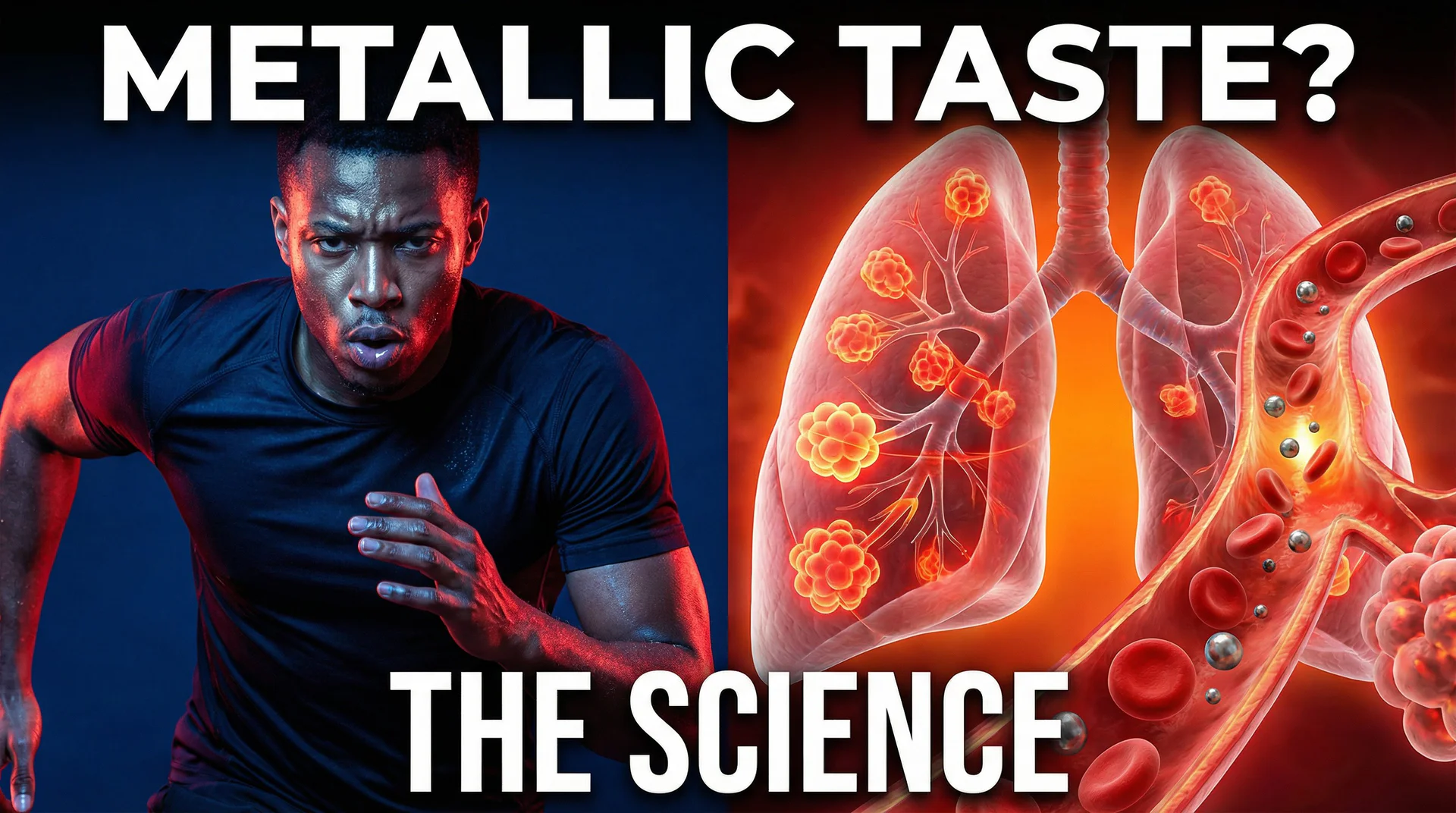
When blood pressure rises significantly during intense exertion, some excess hemoglobin is released from leaky red blood cells in the lungs and transported through the bronchi to the mouth. This breakdown of the blood gas barrier allows red blood cells to leak into the air sacs.
Why It Tastes Like Metal
Red blood cells contain hemoglobin, the protein responsible for carrying oxygen throughout your body. Hemoglobin molecules are bound to a central ion of iron, and this iron is what gives blood its distinctive metallic taste.
Once in your mouth, the iron molecules come in contact with receptors on the tongue that are sensitive to iron, which relay the message to the brain that you sense as a metallic taste. Even tiny amounts of iron can be detected by these specialized receptors, which is why the taste can be quite pronounced even without visible blood in your saliva.
Other Contributing Factors
Cold, Dry Air Irritation
Exercising outdoors in winter or at high altitude introduces additional challenges. If you're sucking in cold, dry air, inflammation and tiny cracks in the lining of your nose and throat could be to blame, especially at higher altitude where the air is thinner.
When you breathe rapidly during intense exercise, this cold, dry air can irritate the mucous membranes in your respiratory passages. These microscopic cracks can release small amounts of blood that contribute to the metallic taste.
Salivary Duct Issues
In the same way you can get kidney stones, you can also develop stones in your salivary ducts, which can cause a blockage or sometimes an infection. Physical activity and heavy breathing can increase saliva production, which may cause an infected duct to give off a foul, metallic taste.
Dental Problems
Tooth decay or gum disease can also contribute to metallic tastes during exercise. The increased blood flow to your gums during physical activity can make existing dental problems more noticeable and cause a metallic sensation in your mouth.
Dehydration
When you're dehydrated, the mucous membranes in your mouth dry out. This dryness can alter your sense of taste and make you more aware of any traces of blood or iron present in your mouth.
Acid Reflux
The increased intra abdominal pressure from exercise can push stomach acid up into your esophagus and mouth, creating a metallic or bitter taste. This is especially common if you exercise too soon after eating.
Who Experiences This Most Often?
The metallic taste during exercise is most common among:
Beginners or returning exercisers: If you've been sedentary and suddenly start intense cardio or running, you're very likely to experience this sensation. Your blood vessels haven't yet adapted to handle the high pressures of intense exercise, making your alveoli walls more vulnerable to red blood cell leakage.
Less fit individuals: People with lower cardiovascular fitness levels experience this more frequently because their circulatory systems are less adapted to the demands of high intensity exercise.
Athletes during peak efforts: Even highly trained athletes can taste metal during extremely intense efforts like races or maximum intensity training sessions. However, it tends to happen less frequently and less intensely as cardiovascular fitness improves.
Cold weather exercisers: People who train outdoors in winter are more susceptible due to the irritating effects of cold, dry air on respiratory passages.
How to Prevent the Metallic Taste
Build Fitness Gradually
The single most effective prevention strategy is building your cardiovascular fitness gradually over time. Start with low to moderate intensity workouts at around 65 to 70 percent of your maximum heart rate. This allows your blood vessels to strengthen and adapt to increased pressure demands, making your alveoli walls more resilient.
Warm Up Properly
Even if you're already fit, a proper 10 to 15 minute warm up is essential. Gradually increasing your body temperature and heart rate helps your arteries expand and allows oxygen rich blood to flow more freely. It also gives your respiratory system time to adjust before you push hard.
Stay Hydrated
Maintain proper hydration before, during, and after workouts to keep your mucous membranes moist and functioning optimally.
Protect Against Cold Air
If you're exercising in cold weather, breathe through a scarf or mask to warm and humidify the air before it enters your lungs. This helps prevent irritation and cracking of your nasal and throat membranes.
Allow Altitude Acclimatization
If you're exercising at high altitude, give your body adequate time to acclimatize before attempting intense workouts.
Maintain Dental Health
Ensure good dental hygiene and address any gum disease or tooth decay with regular dental checkups.
Time Your Meals Properly
Avoid eating large meals immediately before intense exercise to reduce the risk of acid reflux during your workout.
When to See a Doctor
In an otherwise healthy person with no other symptoms, there is no significant medical concern. The metallic taste should fade within a few minutes after you finish exercising.
However, you should seek medical attention if:
If symptoms persist or you've ever coughed up blood or had other respiratory or cardiac concerns, consult your doctor to rule out other more serious causes.
The Bottom Line
That metallic taste in your mouth during or after intense exercise is usually just a sign that you're working at a high intensity. For most people, it's caused by red blood cells leaking into lung air sacs due to increased blood pressure, with iron from hemoglobin triggering taste receptors on your tongue.
While it can be uncomfortable and even alarming, this sensation is generally harmless and actually decreases as your cardiovascular fitness improves. With consistent training, your circulatory system adapts, blood vessels strengthen, and this uncomfortable sensation diminishes over time.
Don't let the metallic taste discourage you from your fitness goals. Instead, view it as feedback from your body about your current fitness level and training intensity. By building your endurance gradually, warming up properly, and following the prevention strategies outlined above, you can minimize this sensation and focus on enjoying the many benefits of regular exercise.
Medical Disclaimer: This article is for informational purposes only and does not constitute medical advice. If you experience persistent or concerning symptoms during exercise, consult with a healthcare professional for proper evaluation and treatment.